
ANDREAS FISCHER violin 1865
Restored by luthier Petr Zdražil | Reviewed by violinist Daniel Matejča
PHOTOS
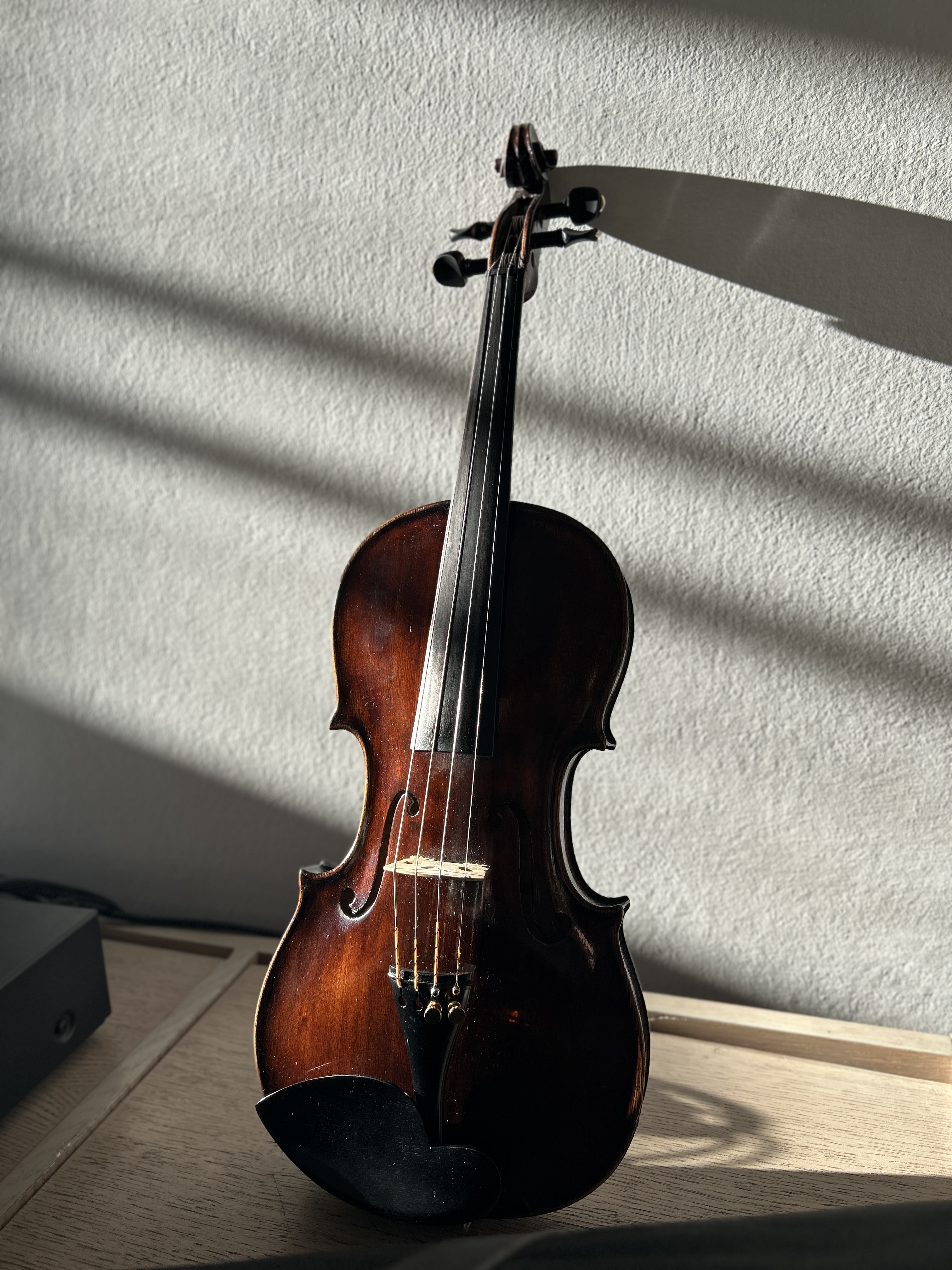


DESCRIPTION
The 19th century was a turning point for violin-making in Europe. Improvements in varnish influenced the rise of new workshops and schools, with many violin-making ateliers using contrasting methods to create their instruments. In the Netherlands and Belgium, for example, French influence dominated violin-making, promoting the idea that the Italian methods used in previous centuries were outdated—largely due to differences in varnish and a perceived decline in precision.
In the regions of Markneukirchen and Klingenthal, violin makers crafted instruments based on Stainer and, at times, Stradivarius models (such as Pfretzschner and his pupils, as well as the Hopf family). While violin-making methods began to diverge across the continent, Italian models remained highly regarded in Central Europe (e.g., Anton Thir in Vienna and the Klotz family in Mittenwald).
Industrialization in the 19th century also contributed to the expansion of road networks across Europe. By the mid-19th century, a vast network of violin makers extended from England through the Netherlands to the Austro-Hungarian Empire (present-day Czech Republic, Poland, Austria, Slovakia, and Hungary), alongside numerous small workshops and cottage industries. These smaller workshops were typically run by one or two luthiers who produced their own instruments entirely—from construction to varnish and fittings.
One such luthier was Andreas Fischer of Znaim (present-day Znojmo), who employed Italian-style methods in his work. Unfortunately, little documentation of Fischer’s output survives, including the number of violins he produced, as Znaim was not widely recognized as a center of violin production.
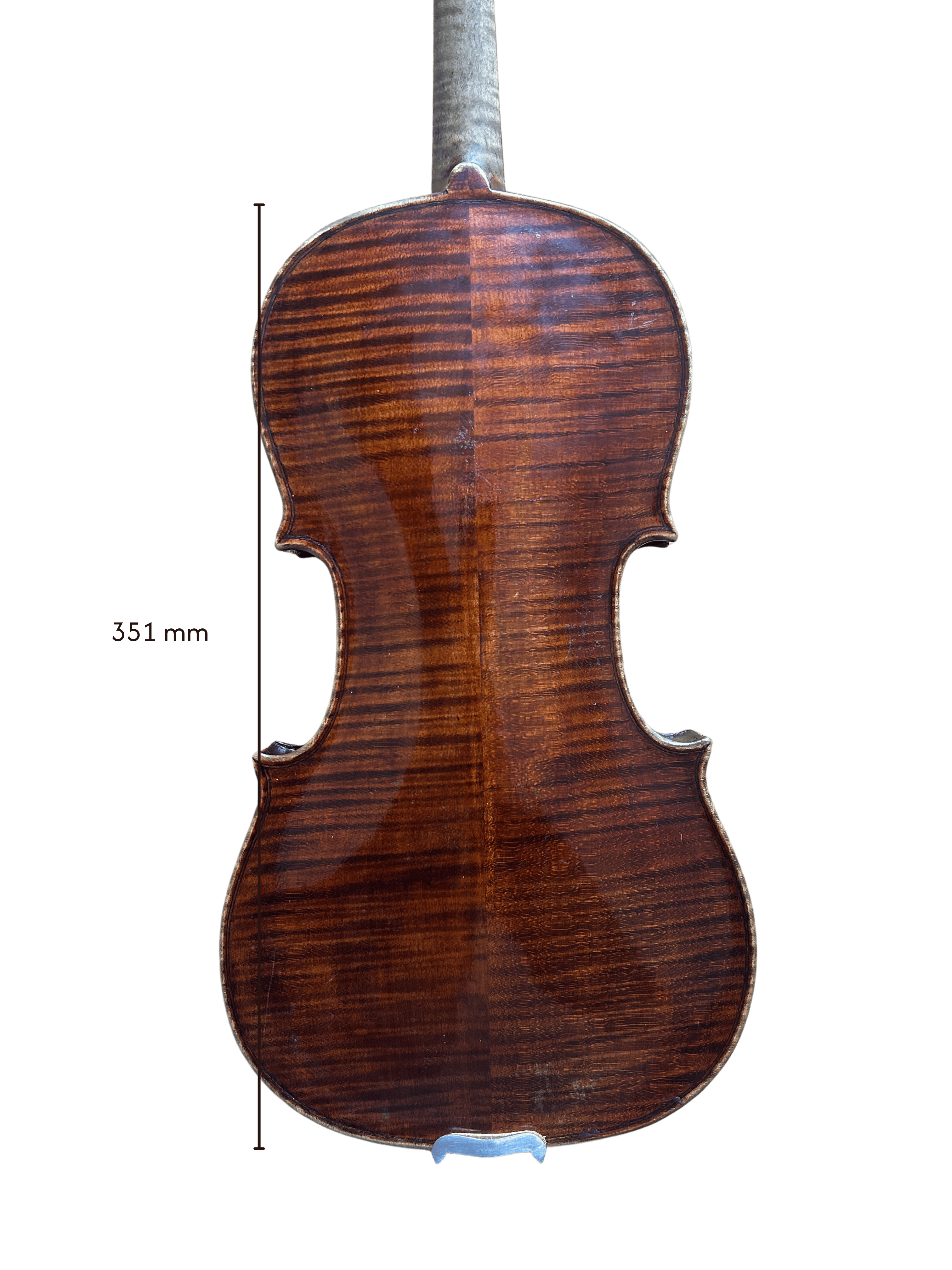
This instrument is one of the few known surviving works by Andreas Fischer, and possibly the only one preserved in this condition. The violin features a spruce front plate and a maple back plate, a typical combination used by Italian makers. This selection of materials contributes to both a lighter instrument and a rich tonal character, producing a round, dark sound in the lower register and a powerful upper register. The violin was restored—both body and fittings—by Petr Zdražil last year.
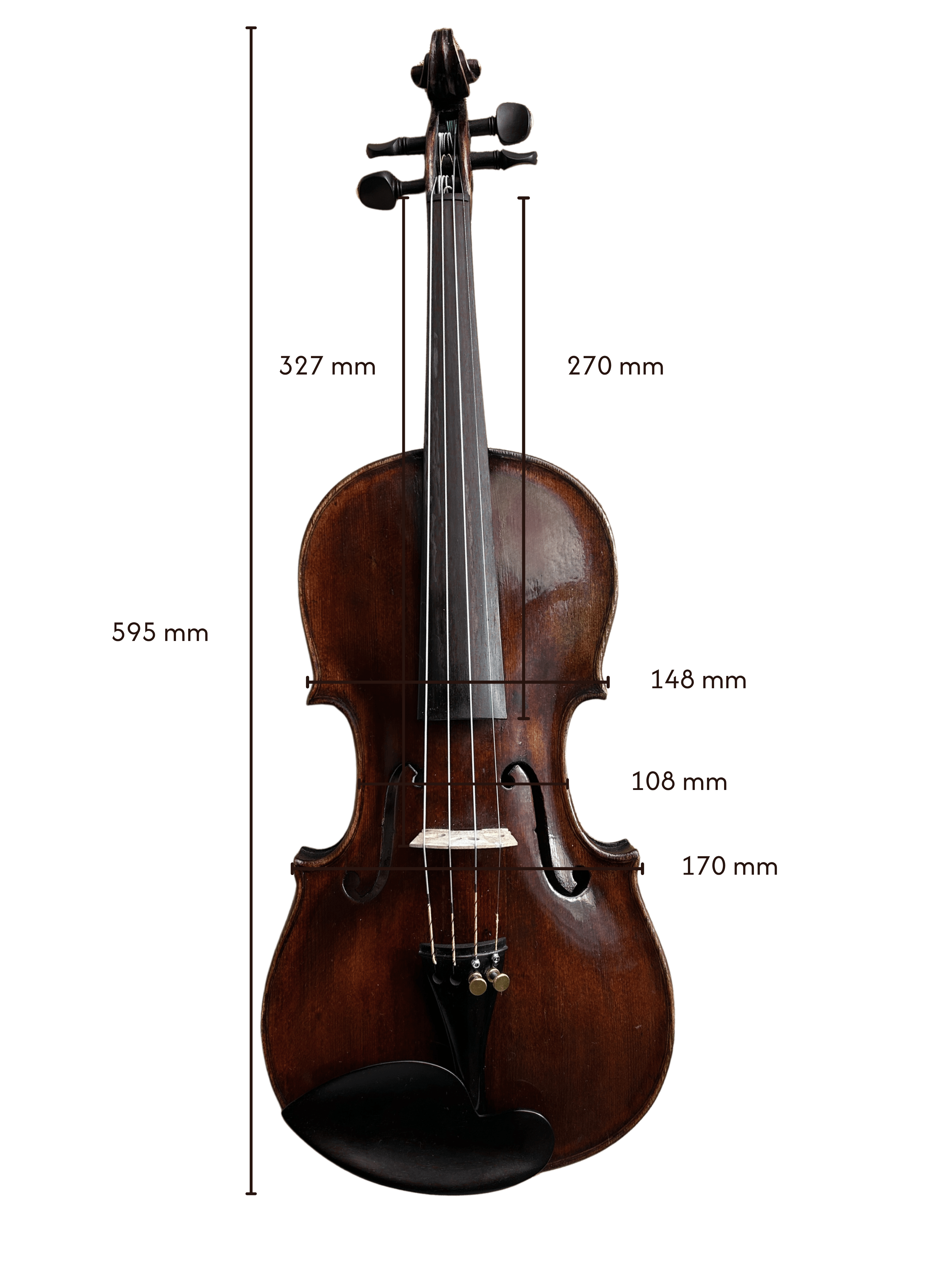
MEASUREMENTS
Parts | Length (in mm) |
Instrument | 595 |
Body (back plate) | 351 |
Upper bout | 148 |
C bout | 108 |
Lower bout | 170 |
Fingerboard | 270 |
String (from nut to bridge) | 327 |
Ribs | 30 |
SOUND
Video and audio recording comparison of the Andreas Fischer violin. Recorded on a Beyerndynamic MC 930 Stereo set microphone.
Reviews
“The violin has a beautiful, dark, and rich tone, from the G string to the slightly more subdued E string. The lower strings are clearly the instrument’s strongest feature. However, with sufficient physical effort, the quality of the lower fifth can also be achieved in the higher positions on the fingerboard. With its slightly shorter measurements and narrow neck, it is an excellent instrument for a violinist with a smaller hand. The violin is ideal for chamber and orchestral playing. I highly recommend it.” – Daniel Matejča
PRICING
The price includes a Certificate of Authenticity issued by Petr Zdražil, as well as VAT and shipping. The price is negotiable.
I prefer to deliver the violin and the certificate of authenticity in person and to complete a formal sales contract to ensure clear proof of ownership for both parties. Conversion rates are based on the price in Czech Koruna (CZK); recently updated on the 23rd of July, 2026.
Heads up: This instrument is currently unavailable until november 2026.
Andreas Fischer violin 1865
200 000 CZK | 8 300 EUR | 9 500 USD | 7 700 CHF